
Pelvic Floor Diagnostics Course: Essential Knowledge
Master the Principles of Pelvic Floor Diagnostics
Designed For Everyone - From Complete Beginners to Experienced Specialists
£349
Enrol Today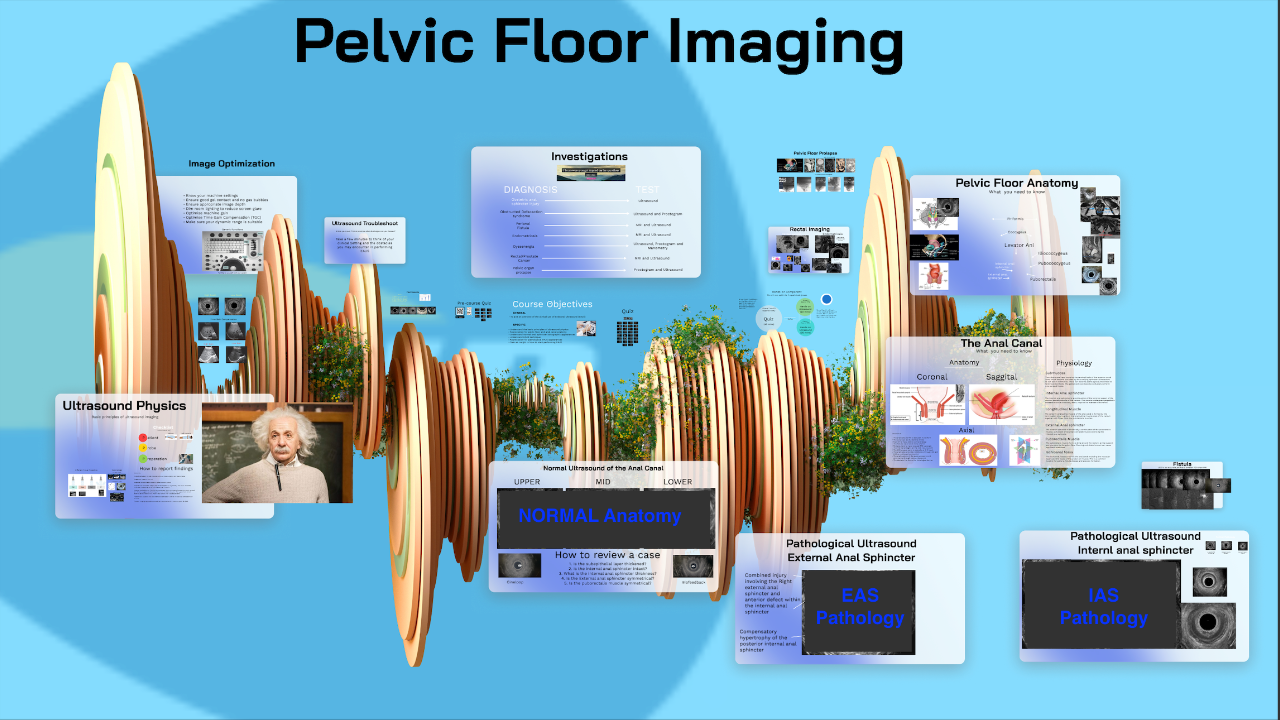
✓ 10 Consultant Led Modules ✓ 50+ Real Clinical Cases ✓ 5 CPD Credits
Pelvic floor disorders are encountered across colorectal surgery, gynaecology, radiology, gastroenterology and physiotherapy—yet many healthcare professionals receive little formal training in how these investigations are performed, interpreted and integrated into clinical practice.
This programme has been developed to bridge that gap.
Rather than teaching individual investigations in isolation, it provides a practical, evidence-based framework that explains when to perform each investigation, how to interpret it systematically, and how different modalities complement one another to answer key clinical questions.
Unlike courses that focus on a single investigation, this programme teaches pelvic floor diagnostics as an integrated pathway—helping you understand how endoanal ultrasound, anorectal manometry, fluoroscopic defecography and MRI work together in everyday clinical practice.
This isn't a recording of our live course—it is a purpose-built online programme, redesigned from the ground up using years of delegate feedback, additional clinical cases and bespoke educational illustrations.
Whether you perform these investigations yourself, report them, discuss them in multidisciplinary meetings or simply want a clearer understanding of pelvic floor disorders, this programme provides the essential knowledge required for modern pelvic floor practice.
Course Modules
-
Ultrasound Principles
-
Clinical Indications
-
Pelvic Floor Anatomy
-
Anal Canal & Endoanal Ultrasound Anatomy
-
Pathological Endoanal Ultrasound
-
Anorectal Manometry
-
Fluoroscopic Defecography
-
MRI Defecography
-
Multi-compartment Pelvic Floor Dysfunction
-
Course Summary
What You'll Learn
By the end of this programme you will be able to:
-
Understand the principles of ultrasound and anorectal physiology.
-
Recognise normal pelvic floor and endoanal ultrasound anatomy.
-
Develop a structured approach to interpreting endoanal ultrasound.
-
Understand normal and abnormal anorectal manometry.
-
Apply a systematic approach to fluoroscopic and MRI defecography.
-
Recognise common pelvic floor disorders, including sphincter injury, rectocele, intussusception and multicompartment pelvic floor dysfunction.
-
Understand the strengths and limitations of each investigation.
-
Relate imaging findings to patient symptoms and clinical management.
This programme won't teach you to memorise investigations—it will teach you how to think about them.
Designed For
This programme has been designed for healthcare professionals involved in the diagnosis and management of pelvic floor disorders, including:
-
Colorectal Surgeons
-
Urogynaecologists
-
Gastroenterologists
-
Radiologists
-
Physiotherapists
-
Sonographers
-
Specialist Nurses
-
Trainees
No previous pelvic floor imaging experience is required.
What's Included
-
10 professionally illustrated teaching modules.
-
50+ real clinical cases with guided interpretation.
-
Structured formative assessments throughout the programme.
-
On-Demand access—learn entirely at your own pace.
-
5 CPD Credits, accredited by the Royal College of Radiologists CPD Scheme.
-
Endorsed by the British Medical Ultrasound Society (BMUS).
Developed from Clinical Practice
This programme has been developed through years of specialist clinical practice and refined using feedback from more than 500 healthcare professionals who attended our live teaching programmes across the UK, Europe, the Middle East and the United States. Rather than simply recording a live course, every module has been redesigned specifically for online learning using bespoke illustrations, additional clinical cases and structured assessments.
Why This Programme Is Different
Most educational resources teach a single investigation. Clinical practice doesn't work like that. Patients move through a diagnostic pathway where ultrasound, anorectal manometry, fluoroscopic defecography and MRI each answer different clinical questions.
This programme teaches how these investigations complement one another, helping you understand not only how they are performed, but when to use them and how to integrate their findings into clinical decision-making.
Continue Your Learning
Completing this programme is the beginning—not the end—of your learning journey.
Clinical expertise develops through continued exposure to patients, investigations and multidisciplinary discussion.
For those wishing to continue learning, The Pelvic Floor Academy Community provides ongoing access to educational webinars, regularly updated clinical cases with guided interpretation and a growing international community of healthcare professionals with an interest in pelvic floor diagnostics.
Community Benefits
• Regular live webinars
• Weekly annotated video cases
• Expanding case library
• Practical clinical discussions
• International multidisciplinary community
Our Philosophy
Understand the anatomy.
Choose the right investigation.
Interpret it systematically.
Always relate the findings back to the patient.
Every investigation has the potential to change a patient's journey.
By developing a structured approach to pelvic floor diagnostics, you'll be better equipped to understand complex investigations, contribute to multidisciplinary decision-making and ultimately help deliver better patient care.
Because behind every investigation is a patient looking for answers.
Every image, every pressure trace and every diagnosis tells part of their story.
Our responsibility isn't simply to perform investigations—it's to understand them, interpret them accurately and provide the information that guides the right treatment.
Better interpretation leads to better decisions.
Better decisions lead to better patient care.
This programme has been carefully developed through specialist clinical practice and refined using feedback from teaching more than 500 healthcare professionals across the UK, Europe, the Middle East and the United States.